Upon the invasion of Poland and outbreak of WWII, Americans lined up to take sides. President Roosevelt addressed the war in his State of the Union in January 1941 and Congress was divided between interventionists and isolationists. There is an excerpt of the speech in your text as well as a video link here. After viewing and reading, visit one of the sites below and support a position: interventionist or isolationist. Remember this is in the beginning of 1941, Pearl Harbor as not been attacked yet. Sites to visit: http://www.teachingamericanhistory.org/library/index.asp?document=1592 http://www.teachingamericanhistory.org/library/index.asp?document=1601 http://www.teachingamericanhistory.org/library/index.asp?document=1593 http://www.teachingamericanhistory.org/library/index.asp?document=1594 For full credit, you must clearly voice one (time-appropriate) position and support it from one of the radio addresses. You should also respond to other student posts. Posts should be completed by Sunday, 12/19.
Wednesday, December 15, 2010

Wednesday, December 1, 2010
Depression/Recession Stories

Choose your option:
1. Talk to a relative about their experiences during the Great Depression and share how the Depression affected him or her.
2. Current recession: How has the most recent recession affected you and/or your family, how might if affect your future plans.
3. Respond to a story found at: http://www.erroluys.com/WhatLifeWasLikeintheGreatDepression.htm
For full credit, answer must be reflective. Respond to classmates' posts when appropriate. Please post by Saturday, December 11, 2010.
Thursday, October 28, 2010
Immigrant Story Reflections

What did you learn about your family in your immigrant artifact research? Was there something in particular that stuck with you? After listening to (and sometimes tasting)presentations from your classmates, what similarities did you find? Was there a particular story that mirrored yours? Do you think immigrants today are different from your ancestors? Explain. Please post by Tuesday 11-2-10 for full credit.
Tuesday, October 5, 2010
Women in Combat

Much has changed since World War I. During WWI, African Americans were assigned to segregated units and women could not serve. Today the Armed Forces are integrated and women can serve, however women are still prevented from serving in certain direct combat positions. Your debate topic: Is this policy outdated? Read the articles below and take a stand. Post by Tuesday, October 12th for full credit.
Check out the following sites:
http://www.nytimes.com/2009/08/16/us/16women.html
http://www.cdi.org/issues/women/combat.html
http://www.npr.org/templates/story/story.php?storyId=14960494
Sunday, September 19, 2010
Puerto Rican Independence

Puerto Rico statehood plebiscites
Since the United States gained possession of Puerto Rico after the defeat of the Spanish in the Spanish-American War, Puerto Ricans have had different movements for statehood or independence. Those movements have resulted in three plebiscites on the political status of the island.
Puerto Rico is a self-governing and incorporated commonwealth state of the United States. In 1917, Puerto Ricans were given U.S. citizenship but were not allowed to participate in government. In 1922, the Puerto Rican Nationalist Party was established to support independence and to that end, instigated uprisings in 1930 and 1950. In 1947, international anti-colonial pressure helped gain Puerto Ricans the right to elect their own governor. In 1950, Congress passed an act to make Puerto Rico a commonwealth, and in 1952, Puerto Rico adopted its own constitution. Puerto Rico then formally became the Commonwealth of Puerto Rico with the status of a free associate state.
During the 1960s, agitation for independence in Puerto Rico increased, and the first status plebiscite was held in 1967. Commonwealth status received 60.4% of the vote, statehood received 39%, and independence received 0.6%. During the 1970s and 1980s, support for statehood grew, and another plebiscite was held. On November 14, 1993, Puerto Ricans voted for the retention of commonwealth status as a free associate state with 48.6% of the vote; statehood received 46.3%, and independence received 4.4%. On December 14, 1994 and again on January 23, 1997, the Legislative Assembly of Puerto Rico petitioned Congress to sponsor a referendum on the future political status of Puerto Rico under the U.S. Constitution (1787). In February 1998, President Bill Clinton openly supported another plebiscite for Puerto Rico.
On March 4, 1998, the House of Representatives approved the United States-Puerto Rico Political Status Act, which sponsored a referendum on Puerto Rico's political status. The legislation was approved by a one-vote margin, and a requirement to make English the official language of Puerto Rico was defeated by Republicans. On September 17, 1998, the Senate passed a resolution that supported self-determination for Puerto Rico and confirmed congressional authority to decide Puerto Rico's status. Both President Clinton and Speaker of the House Newt Gingrich supported the referendum.
On December 13, 1998, Puerto Rico was able to hold a status vote under local election laws. However, the 1998 plebiscite was different from the votes of 1967 and 1993. The Popular Democratic Party, which traditionally supported commonwealth status, disagreed with the definition of commonwealth on the ballot and supported an alternative definition that was rejected by the House Committee on Resources. The Popular Democratic Party then called for its members to vote for "none of the above," which was added to the ballot; it received 50.3% of the vote, while statehood received 46.5%, independence received 2.5%, free association received 0.3%, and "territorial" commonwealth received 0.1% of the votes cast.
The results were more confusing than helpful, and it was agreed that future plebiscites were needed to ascertain the meaning of the 1998 vote. Puerto Rico will hold a status plebiscite every 10 years until independence or statehood wins a majority.
Today, Puerto Rico retains its commonwealth status, which gives the local government authority to maintain order under its own constitution. However, U.S. laws prevail, and Congress has the ultimate authority over Puerto Rico. That status defers foreign policy, defense, and financial matters to the U.S. government. Puerto Ricans have U.S. citizenship, use U.S. currency, and are free to travel in and out of the United States.
"Puerto Rico statehood plebiscites." American History. ABC-CLIO, 2010. Web. 19 Sept.
2010.
Check out the following sites and answer this question, Should Puerto Rico become a state? Yes or no? (no maybes) Refer to at least one document and agree/disagree with your classmates. Post for full credit by Saturday 9-25.
Check out:
http://www.foxnews.com/story/0,2933,591683,00.html
http://www.essortment.com/all/puertoricansta_rdla.htm
http://www.prstatehood.com/home/index.asp
Tuesday, June 1, 2010
9-11 Portraits of Grief
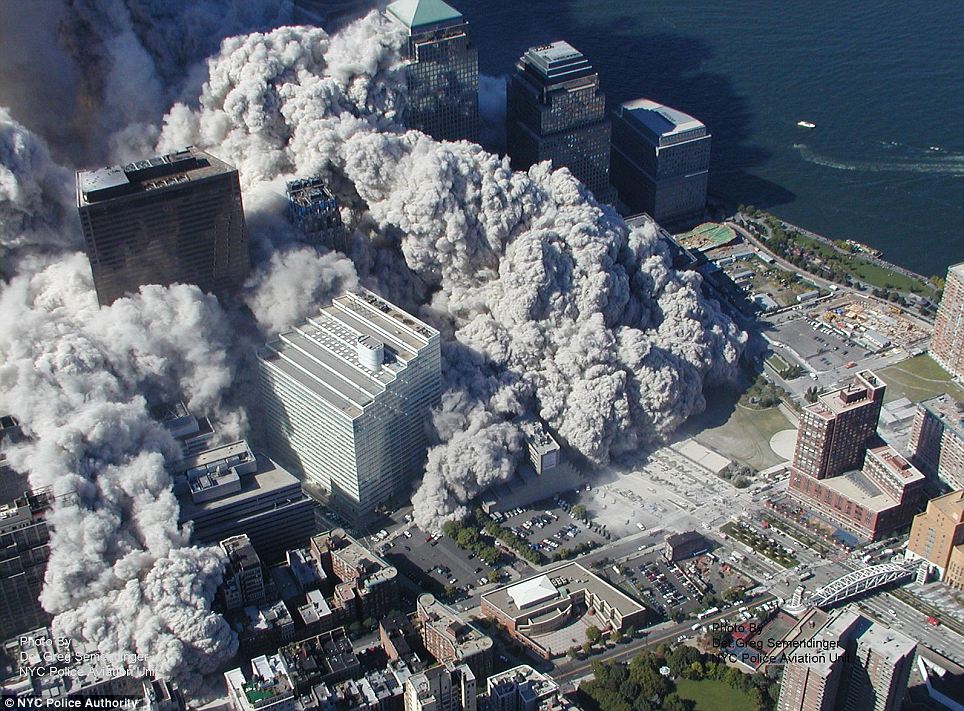

Go to the link below and read several portraits and comment on something you found memorable. Do not repeat persons viewed/commented on by previous students. For full credit post by Monday June 7.
http://topics.nytimes.com/top/news/newyorkandregion/series/portraits_of_grief/index.html
Wednesday, May 12, 2010
Roe v. Wade

What's in a name? How would you identify your position on the Supreme Court decision Roe v. Wade that legalized abortion? Would you classify yourself as Pro-Choice, Pro-Abortion, Pro-Life or Anti-Abortion and why? Plese be respectful of others' opinions. Class 7 Post by Monday 5-17 for full credit. Class 3 by Tuesday 5-18 for full credit.
Subscribe to:
Posts (Atom)

