Monday, November 7, 2011

Modern Day Muckrakers


Muckrakers stirred up muck (figuratively). They were investigative reporters who brought to the general public's attention social and political wrongdoings by writing articles in newspapers. You are to take the role of a modern muckraker. First identify some sort of injustice occurring today; it can be in school or in society (political or social issues). Write a paragraph exposing the injustice and then a short solution. If you post after 5pm on Friday 11/11/11, you will only earn 1/2 credit if you repeat an injustice already posted. All posts must be completed by Monday, 11/14/11 for full credit.

Monday, September 26, 2011

America Emerging as a World Power


Respond to the question of Puerto Rico. Puerto Rico was acquired as a territory as a result of the Spanish-American War.

Since the United States gained possession of Puerto Rico after the defeat of the Spanish in the Spanish-American War, Puerto Ricans have had different movements for statehood or independence. Those movements have resulted in three plebiscites on the political status of the island.

Puerto Rico is a self-governing and incorporated commonwealth state of the United States. In 1917, Puerto Ricans were given U.S. citizenship but were not allowed to participate in government. In 1922, the Puerto Rican Nationalist Party was established to support independence and to that end, instigated uprisings in 1930 and 1950. In 1947, international anti-colonial pressure helped gain Puerto Ricans the right to elect their own governor. In 1950, Congress passed an act to make Puerto Rico a commonwealth, and in 1952, Puerto Rico adopted its own constitution. Puerto Rico then formally became the Commonwealth of Puerto Rico with the status of a free associate state.

During the 1960s, agitation for independence in Puerto Rico increased, and the first status plebiscite was held in 1967. Commonwealth status received 60.4% of the vote, statehood received 39%, and independence received 0.6%. During the 1970s and 1980s, support for statehood grew, and another plebiscite was held. On November 14, 1993, Puerto Ricans voted for the retention of commonwealth status as a free associate state with 48.6% of the vote; statehood received 46.3%, and independence received 4.4%. On December 14, 1994 and again on January 23, 1997, the Legislative Assembly of Puerto Rico petitioned Congress to sponsor a referendum on the future political status of Puerto Rico under the U.S. Constitution (1787). In February 1998, President Bill Clinton openly supported another plebiscite for Puerto Rico.

On March 4, 1998, the House of Representatives approved the United States-Puerto Rico Political Status Act, which sponsored a referendum on Puerto Rico's political status. The legislation was approved by a one-vote margin, and a requirement to make English the official language of Puerto Rico was defeated by Republicans. On September 17, 1998, the Senate passed a resolution that supported self-determination for Puerto Rico and confirmed congressional authority to decide Puerto Rico's status. Both President Clinton and Speaker of the House Newt Gingrich supported the referendum.

On December 13, 1998, Puerto Rico was able to hold a status vote under local election laws. However, the 1998 plebiscite was different from the votes of 1967 and 1993. The Popular Democratic Party, which traditionally supported commonwealth status, disagreed with the definition of commonwealth on the ballot and supported an alternative definition that was rejected by the House Committee on Resources. The Popular Democratic Party then called for its members to vote for "none of the above," which was added to the ballot; it received 50.3% of the vote, while statehood received 46.5%, independence received 2.5%, free association received 0.3%, and "territorial" commonwealth received 0.1% of the votes cast.

The results were more confusing than helpful, and it was agreed that future plebiscites were needed to ascertain the meaning of the 1998 vote. Puerto Rico will hold a status plebiscite every 10 years until independence or statehood wins a majority.

Today, Puerto Rico retains its commonwealth status, which gives the local government authority to maintain order under its own constitution. However, U.S. laws prevail, and Congress has the ultimate authority over Puerto Rico. That status defers foreign policy, defense, and financial matters to the U.S. government. Puerto Ricans have U.S. citizenship, use U.S. currency, and are free to travel in and out of the United States.


"Puerto Rico statehood plebiscites." American History. ABC-CLIO, 2010. Web. 19 Sept.

2010.

Check out the following sites and answer this question, Should Puerto Rico become a state? Yes or no? (no maybes) All: Refer to at least one document and After 9/29agree/disagree with your classmates and refer to one document or link to another site/video.

Check out:

http://www.foxnews.com/story/0,2933,591683,00.html

http://www.essortment.com/all/puertoricansta_rdla.htm

http://www.prstatehood.com/home/index.asp

ALL POSTS MUST BE COMPLETED BY MONDAY, OCTOBER 3rd for full credit. 10 points.

Sunday, September 11, 2011

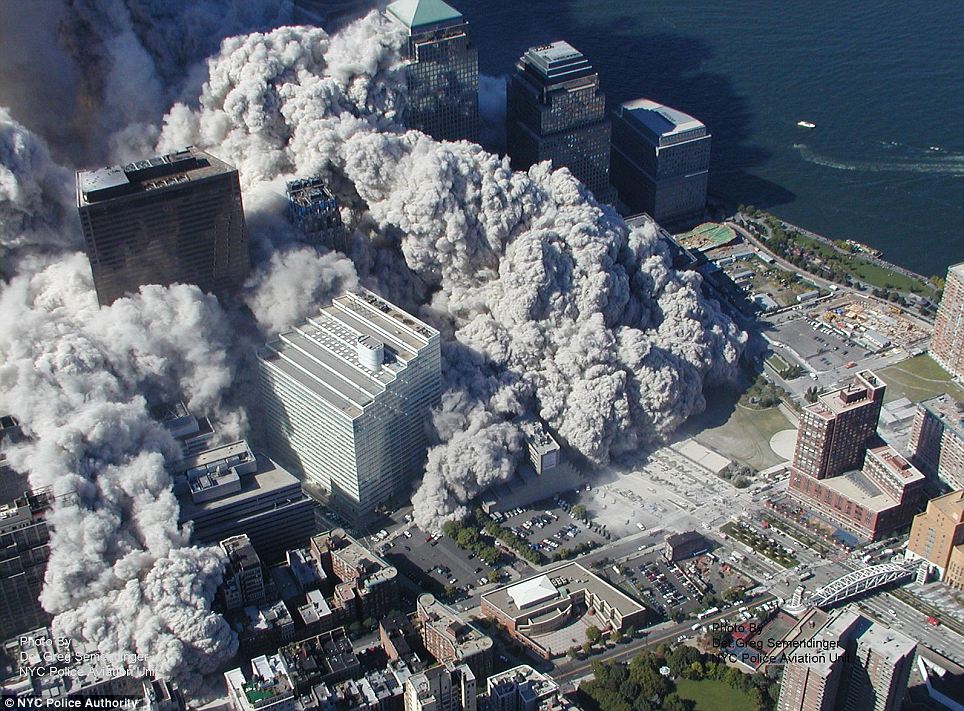
9-11 Your impressions


Most of you probably have very vague, if any, memories of 9-11 when it occurred. After watching or reading about 9-11, discuss one impression and develop one question. Do not repeat questions or impressions from previous posts. All posts must be completed by Monday, September 19th. Any posts completed after 9/19 will earn 1/2 credit. This blog will be worth 10 points.

Sunday, June 5, 2011

Portraits of Grief


Go to the link below and read several portraits and comment on something you found memorable. Do not repeat persons viewed/commented on by previous students. For full credit post by Friday June 10th.

http://topics.nytimes.com/top/news/newyorkandregion/series/portraits_of_grief/index.html

Tuesday, May 31, 2011

9/11 Memories


We will be studying all different aspects of 9/11. What are your earliest memories of the attacks? Where were you? What did your parents tell you (at the time) or were you unaware of the events? Compare your experiences with your classmates. Post by Sunday June 5 for full credit. All posts after June 3 must refer to a previous post.

Friday, May 6, 2011

Women's Rights

In recognition of the Women's rights movement, check out these videos from
youtube.com. Comment on the videos/stereotypes (refer to video title) and
reflect on how things have changed and how things have stayed the same. If you
aren't sure ask a working woman for her opinion. Any posts
after Wednesday, May 11th must refer to previous posts.

You will need to copy and paste the following urls to view:
#1 The Trouble with Women
http://www.youtube.com/watch?v=VOxGRuKFwJg&feature=related
#2 Value of a Housewife
http://www.youtube.com/watch?v=lTLK9Q4sWT0&feature=related
#3 Before Women's Lib
http://www.youtube.com/watch?v=Pq_9wu-KjTk&feature=related
#4 Harvey's Birthday Coffee
http://www.youtube.com/watch?v=h-0rJlj_vwA&NR=1
#5 Queen for a day
http://www.youtube.com/watch?v=a_j4o1vZX8U

ALL POSTS MUST BE COMPLETED BY MONDAY, 16th. Any posts after will earn 1/2 credit.

Thursday, April 7, 2011

Vietnam Wall


Many of you have had the opportunity to visit the Vietnam Wall Memorial in Washington D.C. and know that it is a very emotional exhibit. I would like you to visit the online wall @ http://thewall-usa.com/index.asp#search or the virtual Vietnam Wall @
http://www.virtualwall.org/index.html

I would like you to search for someone's story by using your birthday (month, day, year would be from 1945-1950) on the first link or by your initials in the 2nd link. Your posting should simply look like this:
Soldier's Name
Hometown
Age at death
Year and reason (if listed) of death
Any story, fact or quote associated with that person.

You may have to search several names or cross-reference both sites to find out some personal information.

Do not repeat names, that is why I want you to use your initials or birthday.

All posts should be completed by Thursday, April 14th @ Midnight for full credit. Any posts after 4/14 will earn 1/2 credit.

Tuesday, March 8, 2011

In the Heat of the Night


Respond to one of the following items, what is its signficance?

*Examine Chief Gillespie (growth/limitations)
*Examine Virgil Tibbs (growth/limitations)
*Examples of Institutionalized racism
*I'm close. I can bring that fat cat down! I can bring him right off this hill!"
*"You take care now, Virgil,"


Post for full credit by Sunday, March 13th. Any posts after Friday 4pm (3/11) must also respond to previous posts.

Tuesday, February 8, 2011

Cold War Interviews


Interview an adult (anyone 40 or over should be able to participate) about their memories of the Cold War. Plan your general questions ahead of time. Poor interviews are generally the result of poor questions.
• Start with open-ended questions rather than ones that can be answered with a yes or no. Be prepared to follow-up on your questions to clarify confusing points and get at what you truly want to know.
• Ask about opinions, experiences and perspectives NOT facts that you could look up in books.
• Be sure your question is clear, clearly understood by the subject and not redundant in nature.
• Questions should not be leading, as leading questions assume an answer in advance

TO SUBMIT:
1. Interview:
a. Introductory paragraph which provides biographical information and an explanation of how the person relates to your topic. Time, place and setting should also be included.
b. Q and A Format:
EXAMPLE: Q: Do you remember where you were and how you reacted when you
Learned the Challenger exploded? A: Yes, I was at work and our supervisor told us. It was really
shocking. I remembered on my way to work earlier that day all
about the teacher who was going on the trip, and how exciting it was going to be for her students etc .


Include your introduction from your interview and summarize the interview highlighting the most interesting components. Any posts after 2/17 should include comments regarding similarities and differences among interviews. All posts should be submitted by Thursday 2/24. Any post submitted after 2/24 will only be granted half-credit. Loss of internet is not an acceptable excuse for late submissions.

Wednesday, December 15, 2010

World War II: Stay out or help out?

Upon the invasion of Poland and outbreak of WWII, Americans lined up to take sides. President Roosevelt addressed the war in his State of the Union in January 1941 and Congress was divided between interventionists and isolationists. There is an excerpt of the speech in your text as well as a video link here. After viewing and reading, visit one of the sites below and support a position: interventionist or isolationist. Remember this is in the beginning of 1941, Pearl Harbor as not been attacked yet. Sites to visit: http://www.teachingamericanhistory.org/library/index.asp?document=1592 http://www.teachingamericanhistory.org/library/index.asp?document=1601 http://www.teachingamericanhistory.org/library/index.asp?document=1593 http://www.teachingamericanhistory.org/library/index.asp?document=1594 For full credit, you must clearly voice one (time-appropriate) position and support it from one of the radio addresses. You should also respond to other student posts. Posts should be completed by Sunday, 12/19.

Wednesday, December 1, 2010

Depression/Recession Stories


Choose your option:
1. Talk to a relative about their experiences during the Great Depression and share how the Depression affected him or her.
2. Current recession: How has the most recent recession affected you and/or your family, how might if affect your future plans.
3. Respond to a story found at: http://www.erroluys.com/WhatLifeWasLikeintheGreatDepression.htm
For full credit, answer must be reflective. Respond to classmates' posts when appropriate. Please post by Saturday, December 11, 2010.

Thursday, October 28, 2010

Immigrant Story Reflections


What did you learn about your family in your immigrant artifact research? Was there something in particular that stuck with you? After listening to (and sometimes tasting)presentations from your classmates, what similarities did you find? Was there a particular story that mirrored yours? Do you think immigrants today are different from your ancestors? Explain. Please post by Tuesday 11-2-10 for full credit.

Tuesday, October 5, 2010

Women in Combat


Much has changed since World War I. During WWI, African Americans were assigned to segregated units and women could not serve. Today the Armed Forces are integrated and women can serve, however women are still prevented from serving in certain direct combat positions. Your debate topic: Is this policy outdated? Read the articles below and take a stand. Post by Tuesday, October 12th for full credit.
Check out the following sites:
http://www.nytimes.com/2009/08/16/us/16women.html
http://www.cdi.org/issues/women/combat.html
http://www.npr.org/templates/story/story.php?storyId=14960494

Sunday, September 19, 2010

Puerto Rican Independence


Puerto Rico statehood plebiscites


Since the United States gained possession of Puerto Rico after the defeat of the Spanish in the Spanish-American War, Puerto Ricans have had different movements for statehood or independence. Those movements have resulted in three plebiscites on the political status of the island.

Puerto Rico is a self-governing and incorporated commonwealth state of the United States. In 1917, Puerto Ricans were given U.S. citizenship but were not allowed to participate in government. In 1922, the Puerto Rican Nationalist Party was established to support independence and to that end, instigated uprisings in 1930 and 1950. In 1947, international anti-colonial pressure helped gain Puerto Ricans the right to elect their own governor. In 1950, Congress passed an act to make Puerto Rico a commonwealth, and in 1952, Puerto Rico adopted its own constitution. Puerto Rico then formally became the Commonwealth of Puerto Rico with the status of a free associate state.

During the 1960s, agitation for independence in Puerto Rico increased, and the first status plebiscite was held in 1967. Commonwealth status received 60.4% of the vote, statehood received 39%, and independence received 0.6%. During the 1970s and 1980s, support for statehood grew, and another plebiscite was held. On November 14, 1993, Puerto Ricans voted for the retention of commonwealth status as a free associate state with 48.6% of the vote; statehood received 46.3%, and independence received 4.4%. On December 14, 1994 and again on January 23, 1997, the Legislative Assembly of Puerto Rico petitioned Congress to sponsor a referendum on the future political status of Puerto Rico under the U.S. Constitution (1787). In February 1998, President Bill Clinton openly supported another plebiscite for Puerto Rico.

On March 4, 1998, the House of Representatives approved the United States-Puerto Rico Political Status Act, which sponsored a referendum on Puerto Rico's political status. The legislation was approved by a one-vote margin, and a requirement to make English the official language of Puerto Rico was defeated by Republicans. On September 17, 1998, the Senate passed a resolution that supported self-determination for Puerto Rico and confirmed congressional authority to decide Puerto Rico's status. Both President Clinton and Speaker of the House Newt Gingrich supported the referendum.

On December 13, 1998, Puerto Rico was able to hold a status vote under local election laws. However, the 1998 plebiscite was different from the votes of 1967 and 1993. The Popular Democratic Party, which traditionally supported commonwealth status, disagreed with the definition of commonwealth on the ballot and supported an alternative definition that was rejected by the House Committee on Resources. The Popular Democratic Party then called for its members to vote for "none of the above," which was added to the ballot; it received 50.3% of the vote, while statehood received 46.5%, independence received 2.5%, free association received 0.3%, and "territorial" commonwealth received 0.1% of the votes cast.

The results were more confusing than helpful, and it was agreed that future plebiscites were needed to ascertain the meaning of the 1998 vote. Puerto Rico will hold a status plebiscite every 10 years until independence or statehood wins a majority.

Today, Puerto Rico retains its commonwealth status, which gives the local government authority to maintain order under its own constitution. However, U.S. laws prevail, and Congress has the ultimate authority over Puerto Rico. That status defers foreign policy, defense, and financial matters to the U.S. government. Puerto Ricans have U.S. citizenship, use U.S. currency, and are free to travel in and out of the United States.


"Puerto Rico statehood plebiscites." American History. ABC-CLIO, 2010. Web. 19 Sept.

2010.

Check out the following sites and answer this question, Should Puerto Rico become a state? Yes or no? (no maybes) Refer to at least one document and agree/disagree with your classmates. Post for full credit by Saturday 9-25.

Check out:

http://www.foxnews.com/story/0,2933,591683,00.html

http://www.essortment.com/all/puertoricansta_rdla.htm

http://www.prstatehood.com/home/index.asp

Tuesday, June 1, 2010

9-11 Portraits of Grief


Go to the link below and read several portraits and comment on something you found memorable. Do not repeat persons viewed/commented on by previous students. For full credit post by Monday June 7.

http://topics.nytimes.com/top/news/newyorkandregion/series/portraits_of_grief/index.html

Wednesday, May 12, 2010

Roe v. Wade


What's in a name? How would you identify your position on the Supreme Court decision Roe v. Wade that legalized abortion? Would you classify yourself as Pro-Choice, Pro-Abortion, Pro-Life or Anti-Abortion and why? Plese be respectful of others' opinions. Class 7 Post by Monday 5-17 for full credit. Class 3 by Tuesday 5-18 for full credit.

Monday, May 10, 2010

Birth control in schools

Should students be able to obtain birth control (e.g. condoms)at the nurse's office in a [public] high school? Why or why not? Read the article at the site below to assist you in your post.
http://www.guttmacher.org/pubs/tgr/03/5/gr030505.html

Class 7 Post by Thursday 9am (5-13 for full credit)
Class 3 Post by Friday 7:35am (5-14 for full credit)

Sunday, April 25, 2010

Censorship during war


Censorship!

Myron Fox is vice president of the Military Postal History Society , a group that studies the mail that is sent to and from soldiers. He is an expert on United States military and civilian censorship in World War I and World War II. In this interview, he describes how wartime letters were censored.

When were the first soldiers' letters censored in the United States?
We do not believe it was done in an overt manner before the Civil War. It might be that most of the troops before then were illiterate and officers were largely trusted, so they didn't bother.

There was some censoring in the Civil War because letters sometimes had to cross enemy lines. Most of the censoring comes from the prisoner-of-war camps. For example, if someone was writing a letter from Andersonville [a Confederate prison camp where many Union soldiers starved] those at the camp didn't want people to know what was happening, so the prisoners wouldn't be allowed to say anything bad about a camp. The first heavy censorship of U.S. soldiers took place during World War I.

What were the censors looking for?
The censors were looking out for two things in World War I and World War II. They didn't want the soldier to say anything that would be of value to the enemy, such as where they were. They always wanted to camouflage how strong the troops were. "Loose lips sink ships" was the phrase that was very prevalent in WW II and that was the theory in WW I as well.

Officers also were looking to see any weakening of desire among the troops. It's very important in wartime for officers to know about morale issues.

Were the letters ever censored for moral reasons?
One of our researchers recently found over 500 confiscated and condemned letters at the National Archives in College Park, Maryland. They included letters that used graphic language dealing with sex. Our member also found that in some cases the same writer would keep having his letters confiscated and apparently didn't get the message. These letters were never delivered and apparently the sender was never sent a notice of the offense.

Were other types of letters confiscated?
Letters that were sent in foreign languages were also intercepted. Many members of the armed forces were immigrants or the children of immigrants and they were more comfortable communicating home in their native language. A letter written in Polish or Italian usually wasn't delivered because the typical censor didn't know what it said.
http://www.pbs.org/wgbh/amex/warletters/sfeature/sf_censorship.html

To respond:
What types of censorship during times of war would you agree to and what types would you disagree with? Respond to previous posts. Post by Sunday May 2, 2010 for full credit.

Saturday, April 10, 2010

Depression Photo Narratives


What struck you most from your research of the Great Depression in the United States and which of your classmates' presentations made the biggest impression on you? You are encouraged to ask questions of your classmates and check back for additional questions. Final posts complete by Thursday, April 15 for full credit.

Tuesday, March 23, 2010


At the height of the Great Depression, two hundred and fifty thousand teenage hoboes were roaming America. Some left home because they felt they were a burden to their families; some fled homes shattered by the shame of unemployment and poverty. Some left because it seemed a great adventure. With the blessing of parents or as runaways, they hit the road and went in search of a better life.
Identify and explain three things you would bring in a backpack if you were forced to leave your home during the Depression. I will be responding to posts as well, so check back at least once. All posts must be completed by Sunday, March 28th for full credit.